Picture a beginner ESL student hearing their Irish date say, “I’m after eating my dinner,” and experiencing mild panic — did they miss dinner, or is their date just expressing eagerness to eat? As a benevolent waiter, you explain: no, it just means I’ve just eaten. A manner of speaking, not a dating mishap. And, for what it’s worth, entirely correct English. Just not the English in the textbook.
That gap — between what counts as “correct” and what an entire national variety actually speaks — is where this piece lives.
I’ve taught English as a Second Language to francophones for five years now, and like most teachers, I’ve done so carrying certain assumptions about the “subject matter.” Chief among them: that I teach the standard variety, and that the skills students build in my classroom will serve them anywhere English is spoken. Reasonable enough, on the surface. Convenient, too — maybe too convenient.
As an educator, I’ve rarely had occasion to unpack the notion of language variety itself. Students recognize American or British English readily enough, but they tend to conflate accent with dialect — surface sound with underlying system. I understood, before taking a closer look at this, that standards exist. I hadn’t fully grasped how they get made. And in ESL teaching, “culture” is so often an afterthought to functional competence that the deeper question — whose English, exactly, are we teaching? — rarely gets asked at all.
And yet exposure is exposure to something specific. A learner is never dropped into “English” in the abstract; they’re situated within a variety, a species of the language, and over time they develop an ear for it — enough to start noticing that varieties don’t differ arbitrarily. They follow systematic patterns, detectable and describable. Which raises an uncomfortable question for someone who teaches for a living: are we teaching a language, or are we teaching one variety of it, dressed up as the whole?
With that question in mind, I want to use one case to think it through properly: Irish English. Centuries of sustained contact between Irish Gaelic and English produced something genuinely useful for testing our assumptions about what makes a variety “standard” — or not.
What Do We Even Mean By “a Variety”?
Before looking closely at any of this, I assumed language varieties were, more or less, different ways of speaking the same language — regional flavor, nothing more. First correction: sociolinguists Janet Holmes and Nick Wilson describe varieties not as random deviations from a standard, but as consistent systems in their own right, each with its own internal rules for pronunciation, grammar, and vocabulary. Not looser English. Different English, systematically so.
Varieties come in more than one flavor, too — geographic ones, shaped by where speakers live, and social ones, shaped by who they are and which groups they belong to. Irish English sits at an unusually rich intersection of both, which is part of why it resists tidy categorization.
The kind that concerns us here forms through language contact — specifically, through what sociolinguists call substrate and superstrate relationships. The substrate is a population’s original language; the superstrate is the incoming, eventually dominant one. Here’s the part that matters: when a community shifts from one to the other, it doesn’t abandon the substrate cleanly. Features leak through, carried into the new variety like sediment left behind by a retreating tide.
Irish English is about as clean a case as you’ll find. As Irish speakers shifted toward English, they carried pronunciation patterns, grammatical structures, and vocabulary from Gaelic along with them — not as contamination, but as the raw material of a new, stable variety. How much mixing occurred, and where, depended on prestige, timing, and how tightly-knit the community remained throughout the shift.
All of which should make us suspicious of how easily we reach for “standard” and “non-standard” as labels. The complaints tradition — a term coined by linguists James and Lesley Milroy — treats non-standard features as simply incorrect, judged against real-world usage rather than derived from it. It’s less a linguistic judgment than a social one, ranking language by who speaks it rather than how it functions.
Irish English makes that judgment hard to sustain. It functions as the national standard within Ireland, even as plenty of its defining features get flagged as non-standard the moment they cross a border. It continues to expand while Irish Gaelic itself keeps shrinking, cultural revival efforts notwithstanding. And Ireland doesn’t have one Irish English so much as a constellation of them — Yola, Planter English, Anglo-Irish, Ulster Scots, Hiberno-English — each the residue of a distinct historical contact. That layered complexity is, frankly, more than tidy frameworks like Kachru’s “World Englishes circles” were built to handle.
So What, Exactly, Is Irish English?
Start with the raw scale of it: Irish English is, today, the dominant language across both the Republic of Ireland and Northern Ireland — not a competing variety, the variety most people actually use. The Republic’s census doesn’t even bother quantifying English use directly; its dominance is assumed. What it does report is that 40% of the population claims some ability in Irish. Cross the border, and the picture sharpens further: 95.37% of people in Northern Ireland speak English as their main language, against a mere 0.32% who name Irish as their primary home language — though 12.45% report some ability in it.
“Irish English,” it turns out, is really an umbrella term stretched over several distinct varieties: Southern Irish English in the Republic, Ulster English in the North, and urban mixed varieties — Dublin English, Belfast English — layered on top of both. It carries strong ties to Irish identity, yes, but also, less flatteringly, to rural stereotypes and class distinctions that Irish speakers themselves are keenly aware of. Speakers move through the wider English-speaking world without friction; their variety remains, nonetheless, distinctively marked in pronunciation, grammar, and vocabulary.
Here’s the paradox worth sitting with: IE functions as the standard inside Ireland, while plenty of its defining features would be flagged as non-standard the moment they left the country. Add in significant Irish diaspora communities across the UK, US, Canada, and Australia — each shaping the English spoken around them — and you get what linguists call endonormative development: Irish English built its own internal standard, rather than importing one wholesale from Britain or America. Irish schools and media treat IE features as simply normal. International business might disagree. That double life — standard at home, non-standard abroad — is exactly the kind of case that breaks a clean binary.
How English Got There
Ireland is small, but it isn’t uniform — four historical provinces (Ulster in the north, Munster in the south, Leinster around Dublin, Connacht to the west), each absorbing English differently, on its own timeline. That geography matters more than it might seem to, because it’s the reason “Irish English” was never going to be one thing.
English first landed with the Anglo-Norman invasion of 1169, and it landed narrowly — confined, initially, to Dublin and a scatter of urban centres collectively known as “the Pale.” Norman lords spoke French; their lower-class followers spoke English. Past the Pale, Ireland stayed overwhelmingly Irish-speaking for centuries, and English settled into the role of urban, administrative language rather than a national one.
What happened next is, honestly, the more interesting story: many of those English settlers went native. Historians call it Hibernicization, and by the mid-fourteenth century it had gone far enough that Anglo-Norman settlers were being described as “more Irish than the Irish themselves” — adopting the language, the dress, the legal customs, wholesale. The response was legislative panic: the Statutes of Kilkenny (1366) tried to ban intermarriage, Gaelic dress, and the Irish language outright. It didn’t work. By the fifteenth century, whole Anglo-Norman families had gone bilingual and folded into Irish culture as Ireland’s so-called “Old English.” Sociolinguistically, this is about as fertile a setup for contact as you could design: stable, mixed communities, both languages in constant daily use.
The Tudor Plantation period changed the equation again. The Crown began actively settling English and Scottish colonists across Ireland — but not evenly. Ulster received mostly Scottish Protestants; Munster drew more settlers from southern England. That single regional split still echoes today: Ulster English carries a heavier Scottish imprint, while southern varieties preserve traces of older English dialects that have long since vanished from England itself.
The plantations also hard-coded a language hierarchy into Irish life. English became the language of power — law, landownership, education — while most of the population kept speaking Irish, the two remaining in daily, unequal contact. Religion mapped onto this divide almost perfectly: Protestant settlers spoke English or Scots, Catholic natives spoke Irish. Those overlapping lines — linguistic, religious, political — didn’t just shape history; you can still hear their echo in Northern Ireland today.
The real rupture came later, in the eighteenth and nineteenth centuries, when Ireland underwent a language shift about as fast as these things get: around 1800, roughly half the population still spoke Irish; by 1900, that number had collapsed to 15%. Catholic Emancipation opened up jobs and education Catholics had previously been shut out of — but only in English. The National Education Act of 1831 made English the language of schooling outright, accelerating a shift already well underway. When Ireland won independence in 1922, the new government tried to reverse course, enshrining Irish revival in the 1937 Constitution. By then, though, English was already the language of daily life, and no amount of constitutional intention was going to undo that. What Ireland got instead was a durable cultural ambivalence: Irish promoted in law and school, English dominant everywhere people actually talk.
That tension hasn’t resolved so much as become a skill. IE speakers today code-switch fluidly between traditional features and more standardized forms depending on who’s listening — global media pushes toward prestige norms, sure, but pride in IE as something worth keeping hasn’t budged much either.
How Irish English Sounds Different
Everything above sets up the interesting part: what actually changed in the language itself, mechanically, as a result of all that contact.
Start with pronunciation. IE speakers tend to produce /t/ and /d/ dentally — tongue against the teeth rather than the alveolar ridge further back — which lines up closely with how Irish Gaelic handles the same consonants. Rhoticity tells a similar story: unlike non-rhotic varieties like Received Pronunciation, IE speakers pronounce the /r/ in car, hard, letter — a feature that aligns with Gaelic’s own sound system and sets IE apart from most British varieties in one clean stroke. The /l/ sound follows suit: IE keeps a “clear” /l/ in every position, where many other varieties reserve that clear quality for certain positions and default to a “dark” /l/ at the ends of words.
Vowels carry their own quiet signature. Words like lot, thought, and force take unrounded vowels that sound flatter than their equivalents elsewhere. In Dublin accents specifically, nurse and square can merge into a single sound, foot and strut may become indistinguishable, and out west, even kit and dress start to overlap. Older, more conservative dialects go further still, preserving historical vowel sounds in words like meat and speak — remnants that let antique rhyming pairs like obey/tea survive intact, centuries after most of English moved on.
Grammar is where the substrate influence shows up most vividly — and most famously. Take the after-perfect: “I’m after doing it,” meaning I have just done it. It’s instantly legible to IE speakers and genuinely confusing to almost everyone else, and it’s a direct structural transplant from Irish Gaelic’s own way of marking recent completion. The habitual aspect works the same way — constructions like “She does be working” mark ongoing, repeated action using a pattern calqued straight from Gaelic syntax. Word order shows the same fingerprint: cleft sentences that front the emphasized element (“It’s tired I am”), question formation with distinctive intensifiers like “at all” — all of it tracing back to Gaelic sentence-structure preferences. This is substrate influence operating above the level of individual words, reshaping syntax itself.
Vocabulary tells the story two ways: outright borrowing, and quiet semantic drift. Banshee comes straight from bean sí (“fairy woman”); céilí, a social gathering built around music and dancing, is borrowed whole. Other shifts are subtler — press meaning “cupboard” traces to Irish prios, and yoke meaning “thing” (as in, “hand me that yoke”) comes from ioc. These aren’t isolated curiosities; they’re the residue of generations of bilingual speakers mapping Gaelic concepts onto available English words.
And it doesn’t stop at grammar and vocabulary. IE carries distinctive pragmatic patterns too — greeting formulas, characteristic response patterns, discourse markers that do identity work while never actually threatening mutual intelligibility with other English speakers. Contact, in other words, didn’t just reshape the system. It reshaped how the system gets used.
What Irish English Taught Me About My Own Backyard
Working through Irish English via contact theory did something I didn’t fully expect: it sharpened, rather than introduced, my understanding of how linguistic influence actually operates in bilingual societies. I already carried plenty of raw material for this. I grew up in Canada, where English and French have coexisted, sometimes uneasily, for centuries — nowhere more visibly than in Quebec and Acadia, where Québécois and Acadian French have been shaped by sustained contact with English for as long as I’ve been paying attention to language at all. I also knew, from English history itself, about the diglossia that followed the Norman Conquest — French vocabulary and syntax layering onto Old English until something genuinely new, Middle English, emerged from the mixture.
What I hadn’t grasped, before looking closely at the Irish case, was how precisely these processes get formalized — the substrate/superstrate model, and just how much community-level power dynamics shape which features survive a shift and which don’t. The Gaelic substrate in IE isn’t a light residue sitting on top of English. It’s a structural force, reaching into the sound system, the grammar, the discourse patterns themselves. That reframed bilingualism for me — not as stable coexistence, two systems politely sharing space, but as a dynamic, transformative process that leaves permanent marks on both sides.
IE also clarifies something about how contact features emerge: not through casual borrowing, but through whole communities shifting languages while holding onto cultural identity across generations of overlap. It’s reminiscent of post-1066 England, where English speakers gradually absorbed French forms under conditions of diglossia — except Irish English goes further, folding recurring grammatical patterns like “I’m after eating” or “She does be working” into completely ordinary, everyday usage, all while the substrate keeps its cultural charge intact.
Canadian bilingualism offers a genuinely useful point of comparison here, if an imperfect one. In Quebec, code-switching and borrowing happen constantly, but French holds firm as the dominant language in rural areas — which limits just how deep the structural influence from English actually runs. Ireland took the opposite path: English gradually replaced Irish Gaelic outright, creating far stronger conditions for substrate transfer to take hold. If I want a closer Canadian analogue, it’s probably the Manitoba I grew up in, where generations of francophones assimilated into English rather than maintaining a stable bilingual equilibrium — that dynamic sits much closer to the Irish experience than Quebec does.
What’s most striking, though, is sheer persistence. Despite sustained pressure from British norms and, more recently, global English standards, IE has held onto its substrate-derived features with real tenacity. That durability tells you something: these aren’t relics, and they certainly aren’t errors. They’re expressions of identity, carrying what linguists call covert prestige — status that operates below the radar of official norms. It’s a dynamic I recognize instantly from Canadian French and English regionalisms, which carry real cultural weight locally precisely because they diverge from the international standard, not despite it.
All of which reframes language contact, for me, as something considerably more than a linguistic event. It’s a social one, through and through. It invites comparison across bilingual situations generally, and it makes a genuinely strong case that intense, community-wide bilingualism under conditions of language shift can produce sweeping linguistic change — change that traditional contact models, which assume borrowing creeps gradually from vocabulary toward grammar, simply don’t capture. The Irish case didn’t creep. Contact hit every level at once.
None of this made the concept of language contact new to me. But Irish English sharpened the lens considerably, and gave me a genuinely compelling case study for how linguistic systems reflect social realities rather than existing apart from them. I can now draw sharper parallels — between IE, Norman-influenced medieval English, and French-English contact back home in Canada. Each is a specific story with its own particulars, and each, at the same time, illustrates something generalizable: language varieties are made by the people who speak them, under conditions that leave traces you can still read centuries later.
So Would I Teach It?
If I were introducing Irish English to my own ESL students, I wouldn’t frame it as a curiosity, and I certainly wouldn’t frame it as a “mistaken” form of English. The goal would be simpler and, I think, more useful: help students see that World Englishes like IE reflect real cultural histories and real social dynamics. Variation in language isn’t noise. It’s pattern, and it means something.
IE, used well, becomes a genuinely powerful lens for understanding what happens when languages sit in long-term contact. I’d walk students through Ireland’s key historical phases — early contact, plantation settlement, the nineteenth-century language shift that nearly erased Irish altogether — and show how each stage left a specific, traceable mark on the English spoken in Ireland today. I’d also invite students to dig into their own contact histories, especially those coming from bilingual or post-colonial backgrounds; there’s usually more there than they expect.
Would I “teach” Irish English itself, as content? Selectively, yes — the dental stops, the after-perfect construction — but never as errors to correct. As evidence, instead, of language transfer with its own internal logic, rooted in Irish Gaelic and traceable step by step. That’s a useful thing for students to see: grammar and sentence structure can shift dramatically while staying tethered to an older, ancestral language underneath. Culturally, I’d want them to understand that Irish English carries its own prestige, on its own terms, with speakers moving fluidly between local and global registers depending on the room they’re in. Not because one is “correct” and the other isn’t. Because knowing which voice belongs in which context is, itself, the skill.
Ultimately, Irish English is a model for something bigger than itself: how to respect linguistic diversity, understand why varieties emerge in the first place, and recognize your own language habits as part of the same global story. My classroom was never going to teach just one standard form of English. If it’s doing its job, it teaches students to listen more closely to the world.
Further Reading
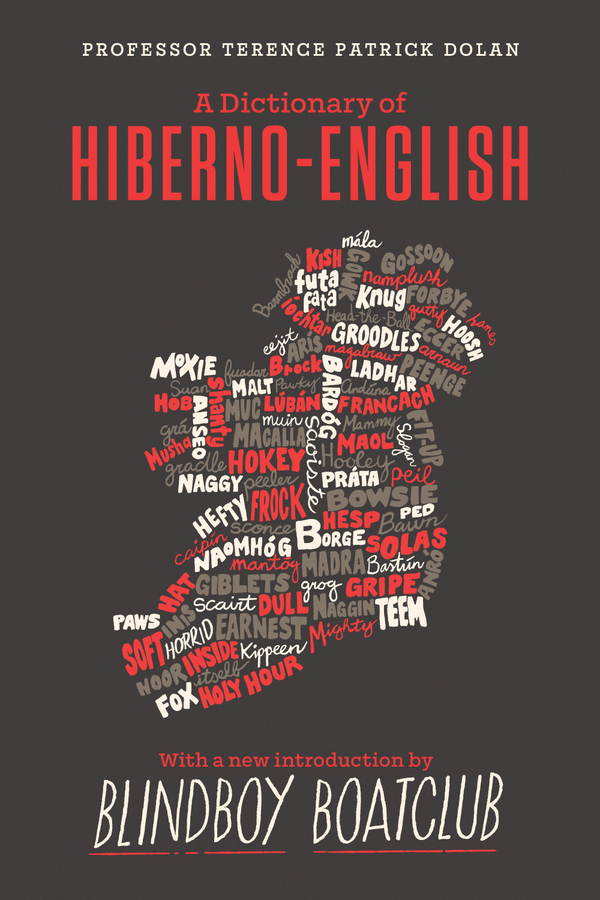
- T.P. Dolan, A Dictionary of Hiberno-English: The Irish Use of English (Gill & Macmillan) — the standard reference for IE vocabulary, by the field’s leading authority.
- Markku Filppula, The Grammar of Irish English (Routledge, 2002) — the deep dive on the grammatical features covered above.
- Markku Filppula, Juhani Klemola & Heli Paulasto, English and Celtic in Contact (Routledge, 2008) — broader contact-linguistics framing.
- Raymond Hickey, Sociolinguistics in Ireland (Palgrave Macmillan, 2016).
- Jeffrey Kallen, Irish English Volume 2: The Republic of Ireland (De Gruyter Mouton, 2013).
- Yale Grammatical Diversity Project — “After-Perfects” — a genuinely accessible academic breakdown of the “I’m after doing it” construction, including its surprising afterlife in Newfoundland English.
- “Irish-English Explained,” Eolas Magazine — a friendly, quote-driven overview built around an interview with Dolan himself; good general-audience companion piece.
- Central Statistics Office (Ireland), Census 2022 — Irish Language and the Gaeltacht, and NISRA’s 2021 Census language data — source of the demographic figures above.

Leave a Reply